
Okay, so check this out—I’ve been juggling wallets for years. Wow. Some were clunky. Others felt slick but left me nervous. My instinct said: security first, usability second. Initially I thought browser wallets were all the same, but then a few near-misses changed that view—seriously, a couple of bad confirmations and I got cautious fast.
Here’s the thing. DeFi moves at lightspeed and mistakes cost real money. Hmm… my gut felt off about blindly approving gas or trusting a single-chain UX. On one hand, you want a wallet that’s seamless. On the other hand, you need one that nudges you to think twice—actually, wait—let me rephrase that: you want a wallet that makes it easy to act correctly, without being a pain each time.
Let me walk you through how I installed rabby wallet, why transaction simulation changed my behavior, and a few practical tips so you don’t mess up the first week. This is from using it across multiple chains, poking at its transaction preview, and yes—tripping a bit before getting comfortable. I’ll be honest, I’m biased toward tools that force me to slow down when it matters.
First impressions: the install was straightforward. Really. Download the extension, add it to Chrome (works with other Chromium browsers too), create a new vault or import a seed, set a strong password, back up your seed—do that. My setup took maybe five to ten minutes including reading the prompts. Something about that quick flow felt reassuring. But—there was a small hiccup when I imported an old seed; one of my accounts didn’t show tokens until I added the custom token contract. So, heads up.
Why transaction simulation is a game-changer
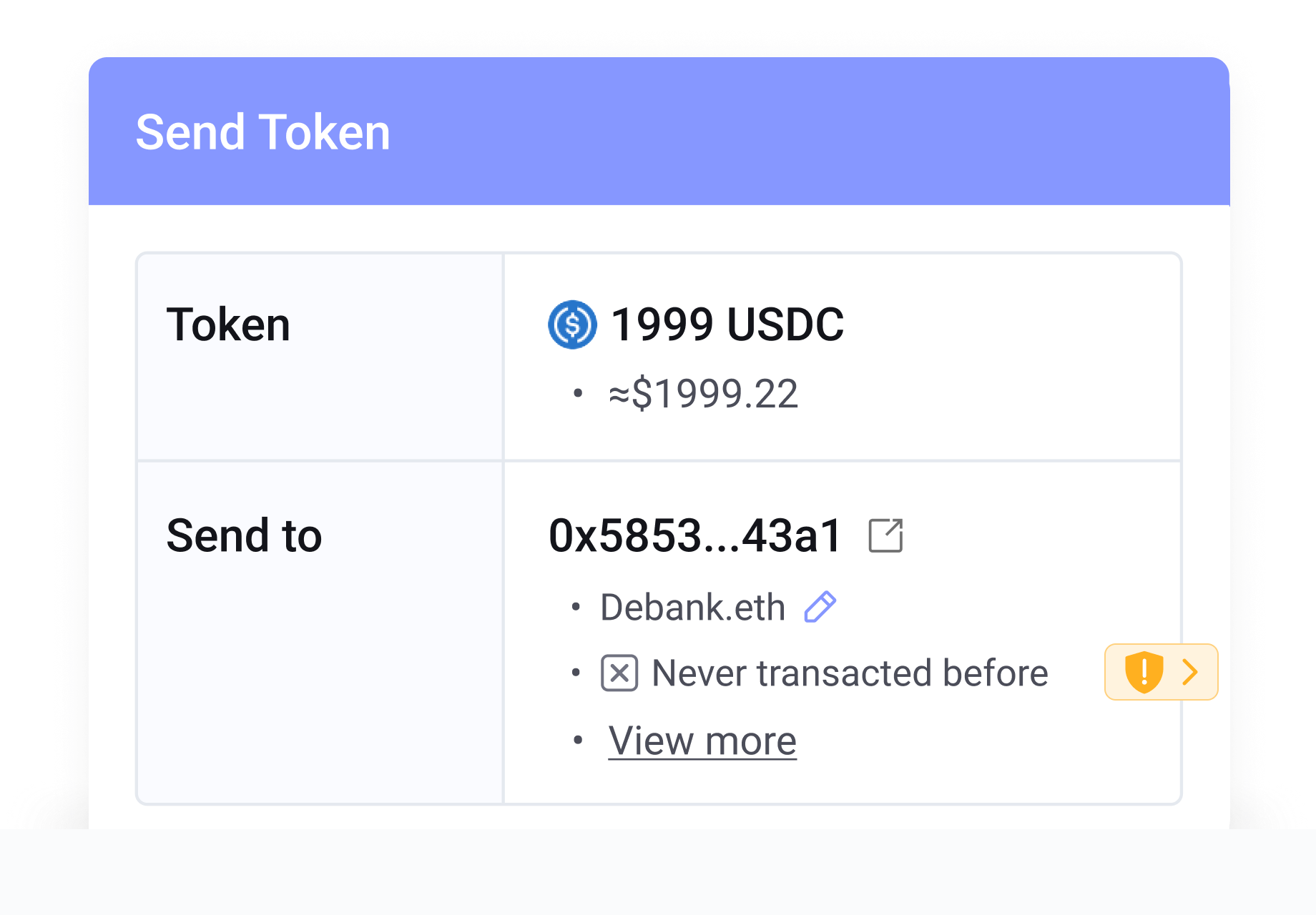
Whoa! Transaction simulation sounds nerdy. But it’s not. Short version: it previews what on-chain execution will likely do before you sign. Medium version: it estimates token transfers, contract calls, and slippage outcomes, and can show potential approval flows and high-risk behaviors. Longer thought: when you can see a simulated trace that highlights unexpected token approvals or hidden contract calls, you can stop and avoid a bad interaction before you hit “confirm,” which in practice saves you from phishing contracts and sticky approvals that drain funds.
My experience: one swap on a new DEX showed a token approval to an unfamiliar contract. The simulator flagged that the approval amount was unlimited. On the spot I paused—my instinct said “nope”—and I revoked a previous approval via a token manager before proceeding. That little pause prevented a messy scenario where an exploit could’ve taken advantage of an open approval. On the other hand, simulation isn’t perfect; it doesn’t guarantee safety but it reduces surprise vectors, which is very very important.
Honestly, the transparency you get is calming. It surfaces low-level calls and approximate gas usage. And it tells you when a contract is trying to route funds through an unexpected intermediary (which, frankly, bugs me). So yeah—simulation won’t make you invincible, but it makes you less sloppy.
Step-by-step: installing and getting started with rabby wallet
Alright, practical steps. I’ll keep these short and useful.
1) Get the extension. Go to the official page and download the browser extension. I used Chrome. You can use other Chromium browsers too. 2) Add the extension. Click the extension icon and pin it—makes life easier. 3) Create or import an account. New seed or import an existing mnemonic or private key. Back up the seed offline. Seriously. Write it down. 4) Set preferences: enable auto chain detection if you hop networks, and toggle transaction simulation if it’s not on by default. 5) Connect selectively: when a site asks, review permissions before connecting. If something asks for unlimited approvals, pause and simulate.
For a more natural intro, I tried the wallet with a small test amount first—$5 worth of ETH-equivalent on a testnet—and simulated a swap. Good practice: simulate, send, and watch the tx before using larger sums. My rule of thumb now: never approve unlimited allowances unless you trust the contract and can revoke later.
By the way—I used rabby wallet to test a few cross-chain bridges and swap aggregators. It handled multiple chains cleanly and showed me the routing path in the simulation trace, which helped me choose the cheapest/safer path. (oh, and by the way… checking paths is a tiny pain with some wallets; Rabby made it easier.)
Common friction points and how to avoid them
Short tip: gas settings matter. Medium tip: simulation gives a gas estimate, but on congested days you might need to bump it. Longer thought: if you’re impatient and set a low gas, simulators might still show a proposed execution but your tx can sit pending or fail; that creates resubmits and surprise nonce issues, so be deliberate with gas and don’t panic-flood your wallet with retries.
Another friction point: imported tokens not showing. Add custom tokens by contract address when balances look off. Also, some dapps use meta-transactions or relay patterns—simulation handles many but not all of these; sometimes a dapp’s backend can alter the final on-chain call in ways that the extension can’t perfectly predict. On one occasion, my transaction simulation missed an off-chain parameter and the outcome differed slightly. Not catastrophic, but it taught me to keep checks in place.
Here’s what bugs me about approval UIs in some wallets: they hide scope and amount. Rabby makes it more visible in its simulation. Take a breath, look for “approval amount” and “spender address”—if either looks odd, revoke or reject. You can also preemptively use a token approval manager to set allowances to minimums or revoke old ones.
Advanced tips for power users
Power users, lean in. If you interact with contracts a lot, do this routine: 1) simulate, 2) double-check calldata (if you know how), 3) validate the receiving/spender address against known addresses, 4) consider using a hardware wallet in conjunction with the extension. I pair Rabby with an external signer sometimes; the combo reduces attack surface because a rogue extension can’t sign without the hardware device.
Also, leverage multi-account workflows. I keep a hot account for small trades and a cold account for larger holdings, moving funds via simulated transactions so I can preview the transfer first. On one weekend I moved funds and the simulation flagged an odd intermediary fee—caught it, avoided the bridge fee, and saved a few percent. Small wins add up.
Oh, and don’t skip network-specific checks: token decimals, wrapped tokens, and chain-specific quirks can mess up amounts. Simulation helps, but manual sanity checks are still a must.
FAQs
Is rabby wallet safe to install?
Short answer: Yes—if you install from the official source and follow basic security hygiene. Medium answer: use the official extension release, verify permissions, and keep your seed offline. Longer: combine it with a hardware wallet for high-value accounts and double-check any site requests for approvals or unusual calls.
Where can I download rabby wallet?
You can download it from the official page here: rabby wallet. Only use the official link and avoid random mirrors—phishing copies exist.
How reliable is the transaction simulation?
Simulation is a strong guardrail but not infallible. It catches many surprising behaviors and reveals approval scopes, routing paths, and gas estimates—but off-chain or backend-constructed calls can sometimes differ. Use simulation as an important tool in your toolbox, not as a silver bullet.
To wrap up—well, not a formal wrap but a truth: using a wallet that prompts you to think is a comfort. My feelings shifted from skeptical to cautious to cautiously optimistic. I still stumble sometimes—humans do—but simulation has reduced dumb mistakes and made me feel more in control. If you’re serious about DeFi, test Rabby with small amounts, enable simulation, and build routines that keep you safe. You’ll thank yourself later (and your wallet will too).