
Your wardrobe is wasting money.
Build a wardrobe system — and stop buying random pieces that don't work together.

Find out if your wardrobe is working for or against you. Complimentary Visibility Gap Review — no obligation.
Every year, professionals invest significant amounts in suits, shirts, shoes, watches, jackets, eastern wear, and accessories. Yet many still find themselves standing in front of a packed wardrobe thinking, "I have nothing to wear." How does that happen?
The answer is simple: most wardrobes are built through random purchases rather than a clear strategy. People buy clothing based on emotions — because a brand is trending, the fabric feels luxurious, a salesperson recommends it, it's on sale, someone else wore it well, or it looked appealing at the moment.
But professional dressing requires a different approach. A powerful wardrobe is not built one random purchase at a time. It is built through planning, structure, and purpose. And that structure is what most professionals are missing.

Most professionals don't have a clothing problem — they have a system problem
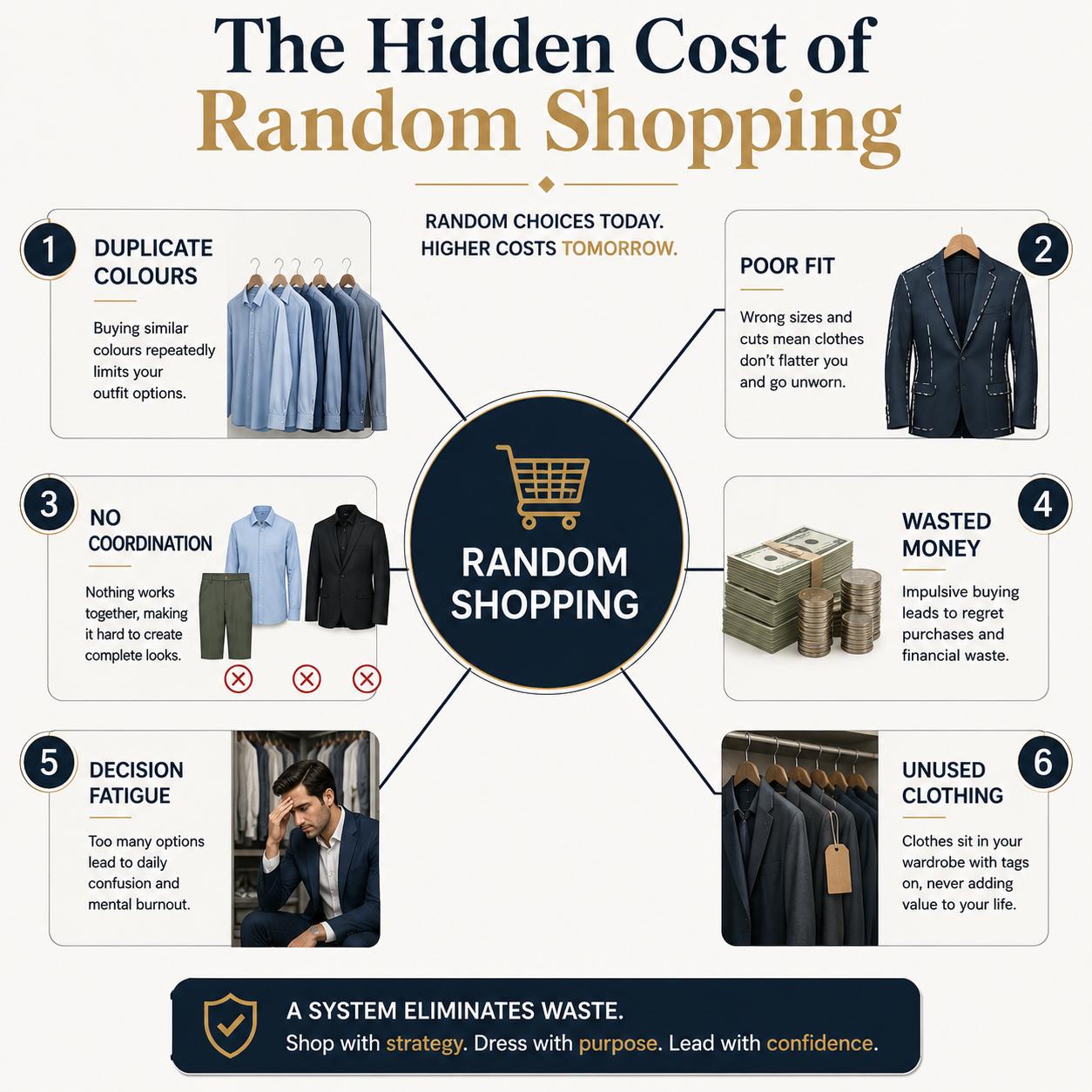
Random shopping costs far more than money. It consumes time. It drains mental energy. It creates unnecessary daily decisions. Most importantly, it leads to inconsistency.
The result is often clothes that do not coordinate, repeated colours and styles, limited outfit combinations, clothing that does not support professional goals, items that remain unworn, and daily frustration about what to wear.
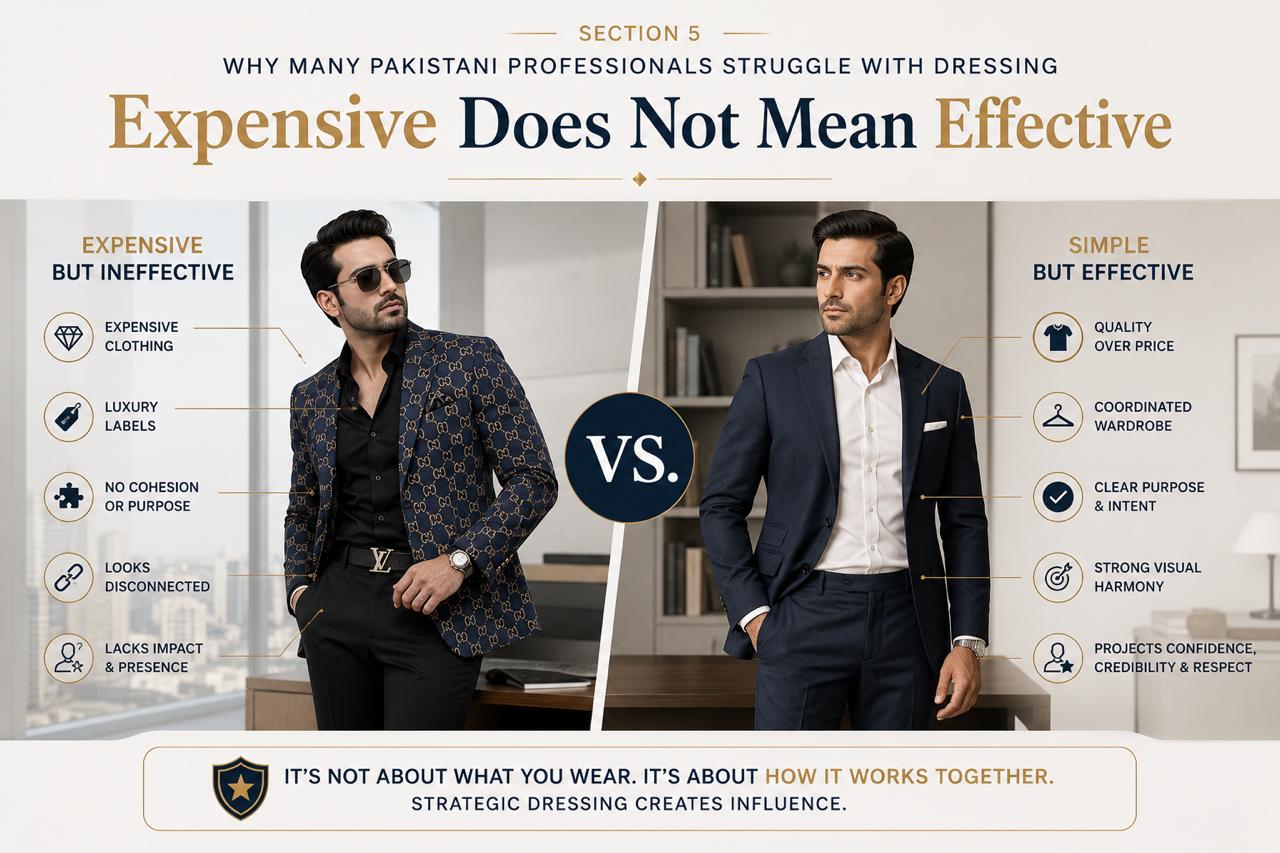
Many professionals own expensive wardrobes — yet they fail to project a polished, confident, and authoritative image. The issue is rarely the clothing itself. The issue is that the pieces do not work together. One expensive blazer cannot compensate for poorly chosen shirts.
Still shopping randomly? A free Visibility Gap Review identifies exactly what your wardrobe is missing.
Book Free Review →Why successful people build systems
The world's most successful organizations rely on systems. Airlines use systems. Hospitals use systems. Financial institutions use systems. Military organizations use systems. High-performing professionals should manage their wardrobes the same way.
A wardrobe should simplify decisions, not complicate them. Every morning, your wardrobe either supports your productivity or adds unnecessary stress. When clothing choices are random, dressing becomes difficult. When clothing choices are strategic, dressing becomes effortless.
The objective is not only to look better. The objective is to reduce decision fatigue and create consistency.
A wardrobe should simplify decisions, not complicate them. When choices are strategic, dressing becomes effortless.
— Hamid Saeed
Buying clothes vs. building a wardrobe
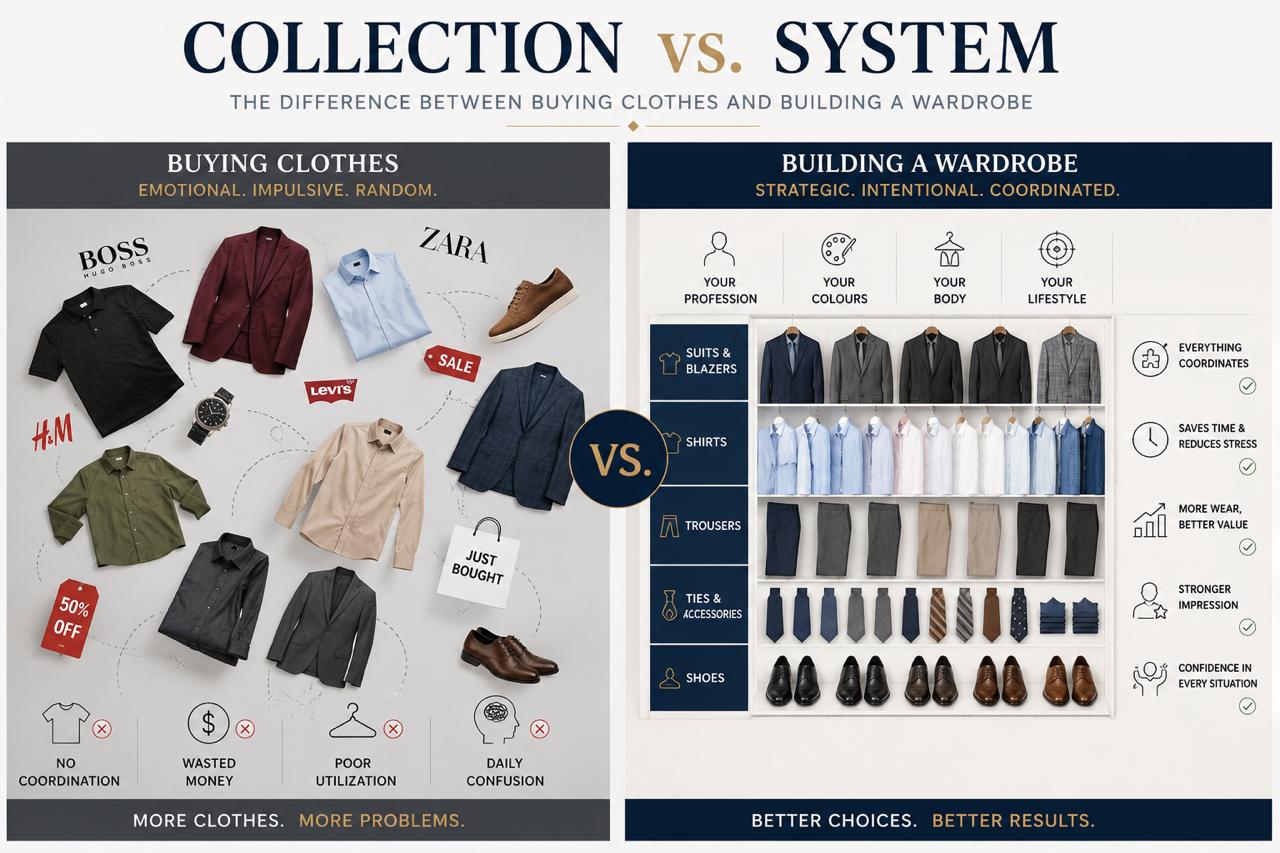
There is a significant difference between buying clothes and building a wardrobe. Buying clothes is emotional. Building a wardrobe is strategic.
A well-designed wardrobe should be based on:
- Pigmentation — your skin tone and what works with it
- Physique — your body structure and proportions
- Personality — how you naturally present yourself
- Profession — what your industry expects
- Position — the seniority your appearance must signal
- Lifestyle — daily and travel requirements
Every item should serve a purpose. Every garment should complement other garments. Every outfit combination should be intentional. The difference is not budget. The difference is planning.
Is your wardrobe built as a system — or a collection of random purchases?
Book a free Visibility Gap Review with Hamid Saeed. In 15 minutes, he'll tell you exactly what's working, what isn't, and what one or two strategic changes could transform your professional presence.
Why many Pakistani professionals struggle with dressing
In Pakistan, many professionals have never been taught how a wardrobe should function. They often focus on brands, trends, premium fabrics, designer labels, and quantity — while overlooking colour coordination, proper fit, body structure, professional dress standards, versatility, and outfit combinations.
As a result, wardrobes become larger but not more effective. The closet gets fuller. The choices become more confusing. The frustration remains unchanged.
The overseas Pakistani challenge
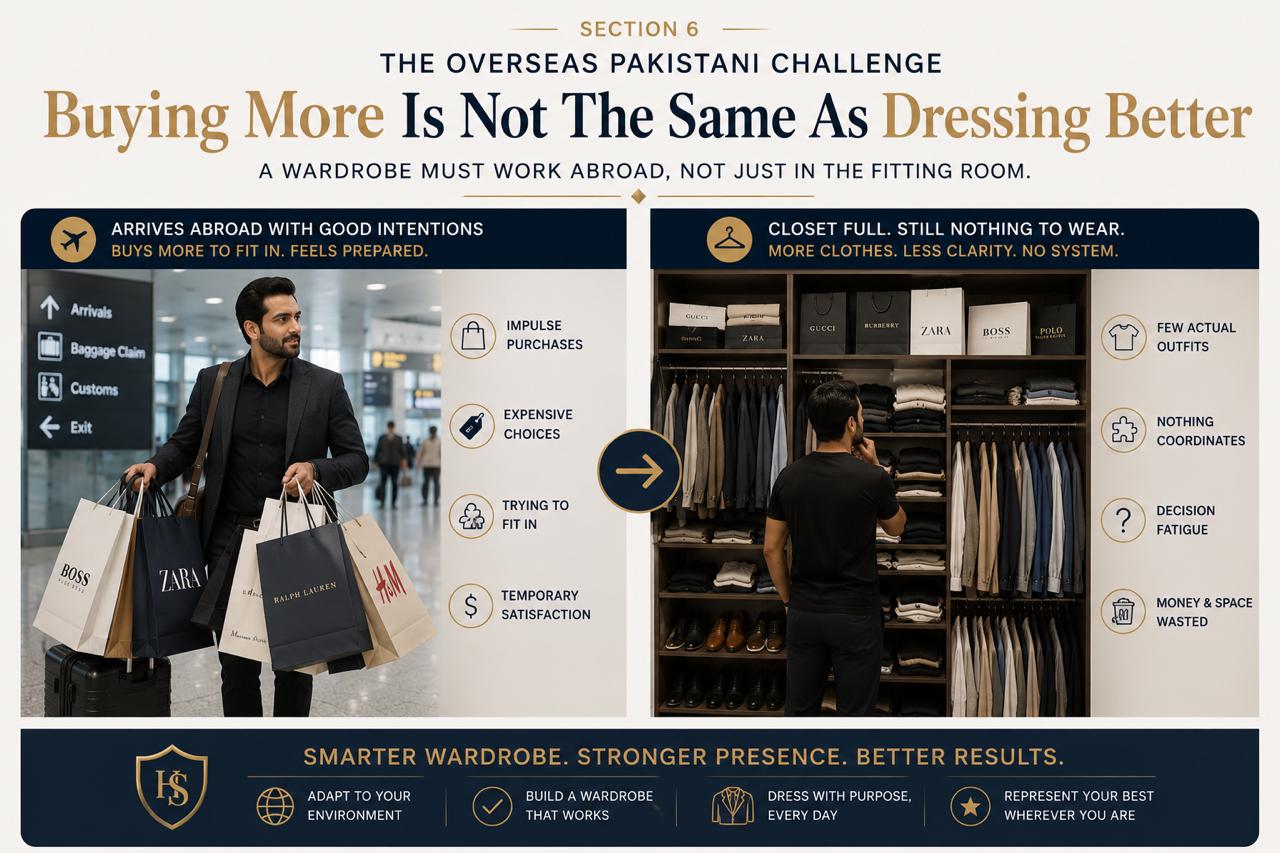
This challenge is even more common among overseas Pakistanis. Many visit Pakistan and are impressed by the quality and affordability of tailoring. As a result, they purchase too many outfits, duplicate colours, similar styles, and clothing that does not align with their lifestyle abroad.
When they return home, much of what they purchased remains unused. A wardrobe should not only look impressive while shopping — it should perform effectively in everyday life.
Visiting Pakistan soon? Book your Visibility Gap Review now and arrive with a plan.
Book Free Review →Your wardrobe communicates before you speak
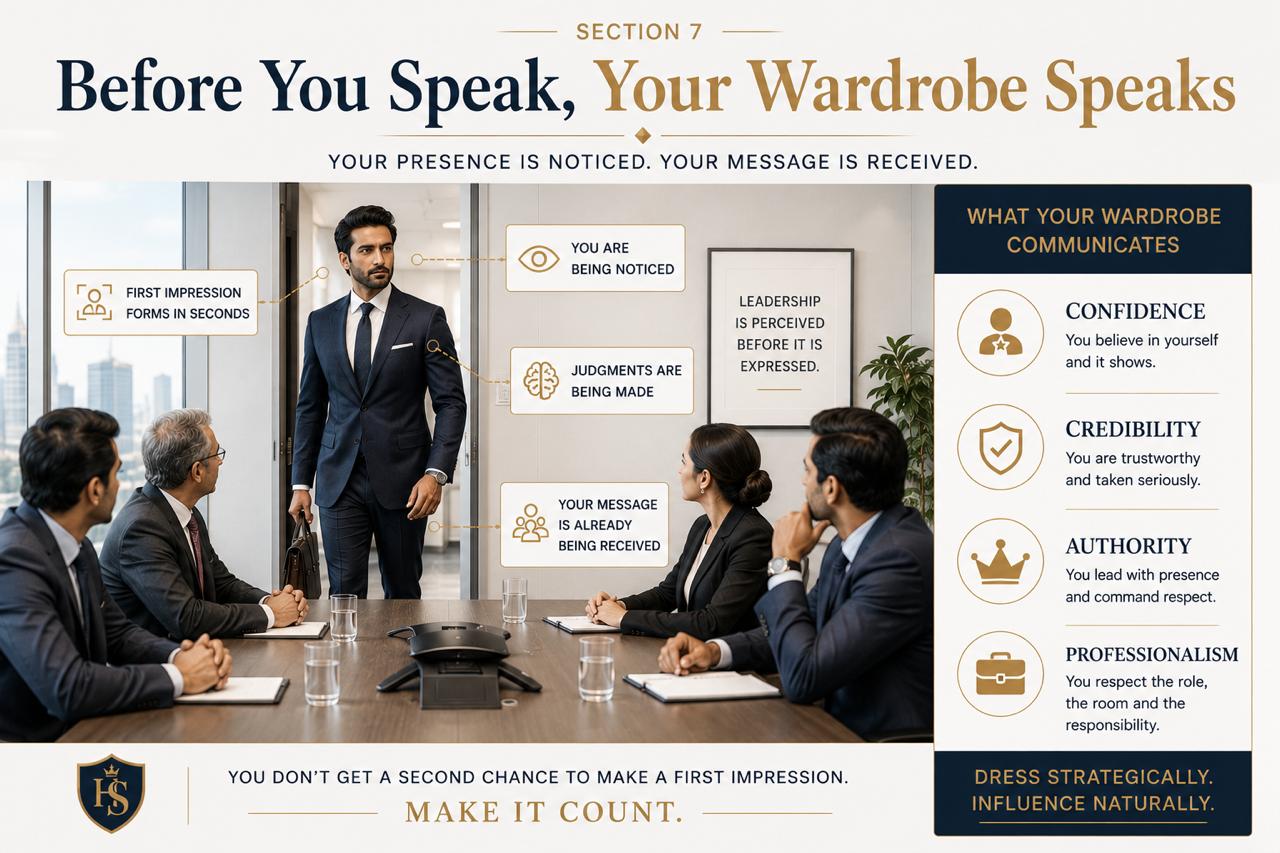
Whether people acknowledge it or not, appearance influences perception. The way you dress affects how others perceive your confidence, professionalism, discipline, credibility, attention to detail, and authority.
This is especially important for executives, business owners, lawyers, doctors, consultants, bankers, entrepreneurs, corporate professionals, and public figures. Your appearance silently communicates your standards — long before you speak, long before you present, long before you negotiate.
Successful professionals dress with intention
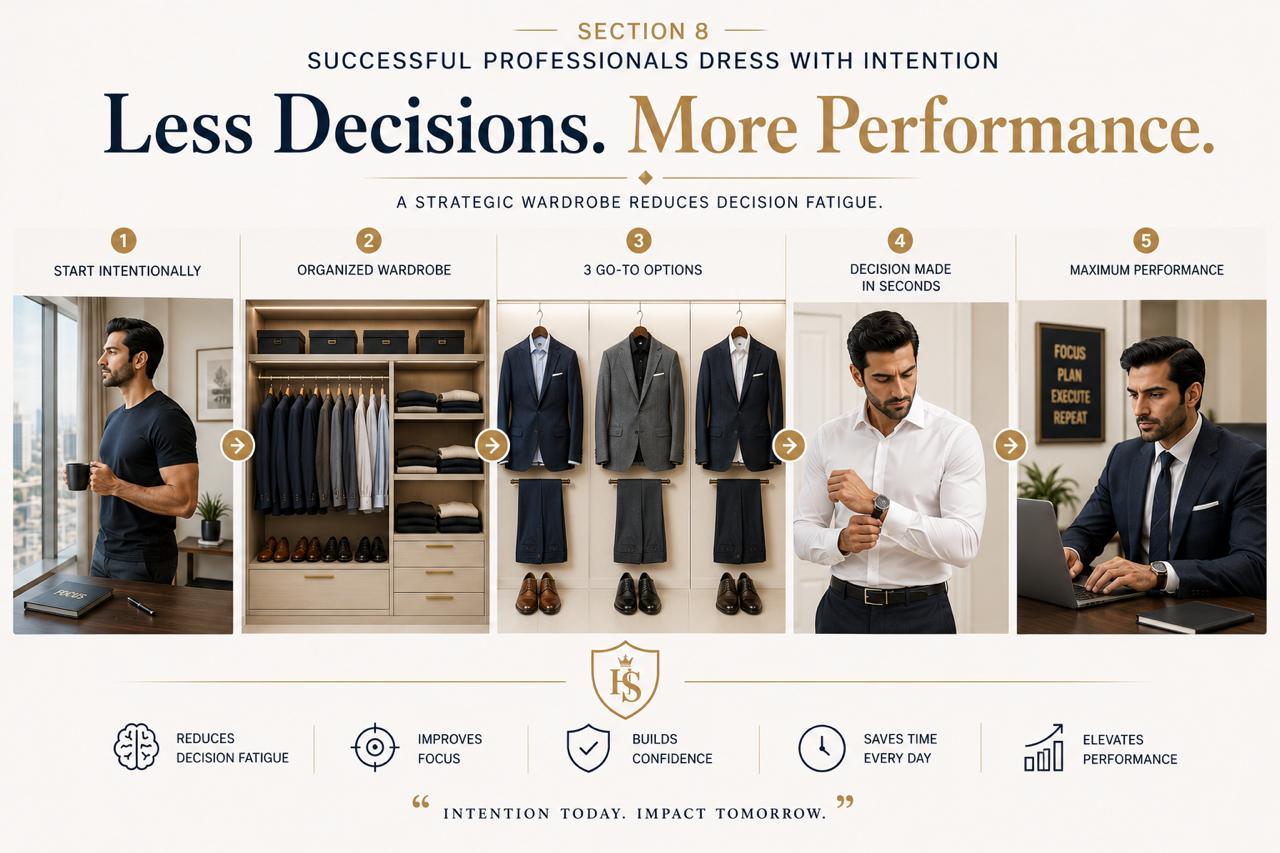
The best-dressed professionals are not necessarily those who spend the most money. They are the ones who make the smartest decisions. They understand which colours complement them, which fit suits their body type, which styles support their profession, which combinations create versatility, and which garments deserve a place in their wardrobe.
This helps reduce wasted spending, poor purchases, decision fatigue, and inconsistent dressing — while increasing confidence, clarity, simplicity, presence, and professional image.
Final thought
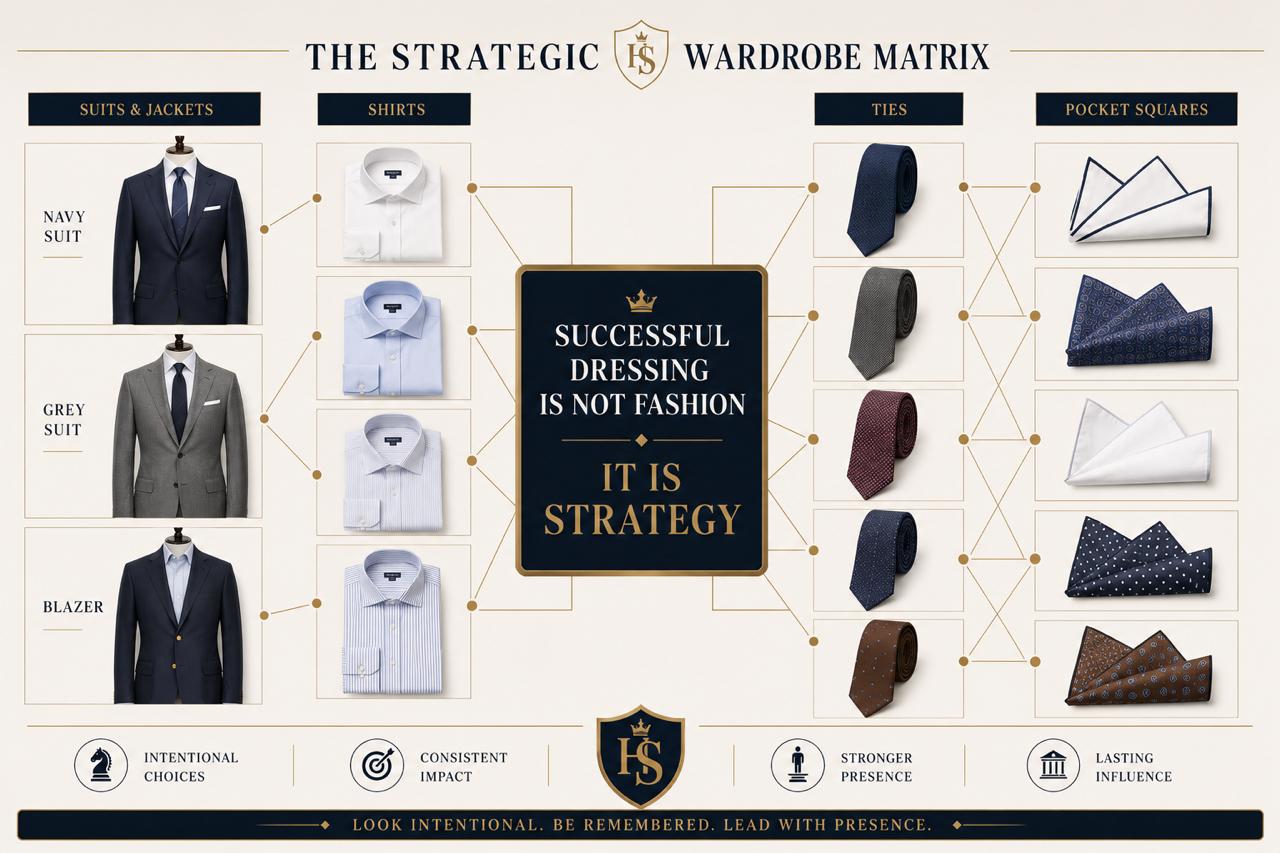
The professionals who create the strongest impact are rarely those with the largest wardrobes. They are the ones whose wardrobe functions as a system. A system that supports their profession. A system that strengthens their credibility. A system that enhances their executive presence.
Because executive presence begins long before you speak. And successful dressing is not about fashion. It is about strategy.
Stop wasting money — start building a wardrobe system.
Book a free Visibility Gap Review with Hamid Saeed. Find out whether your professional image reflects the level you have earned — and what to do about it.